Cart
0
0.00 ZAR
We have built cages, erected barriers and created spectacles, convincing ourselves that the wild exists for our pleasure and our control.
But the animal behind the bars cannot tell its own story. Too often, it is the captor who decides what the world sees.
Until we learn to look beyond the spectacle, we risk mistaking domination for power and silence for consent.
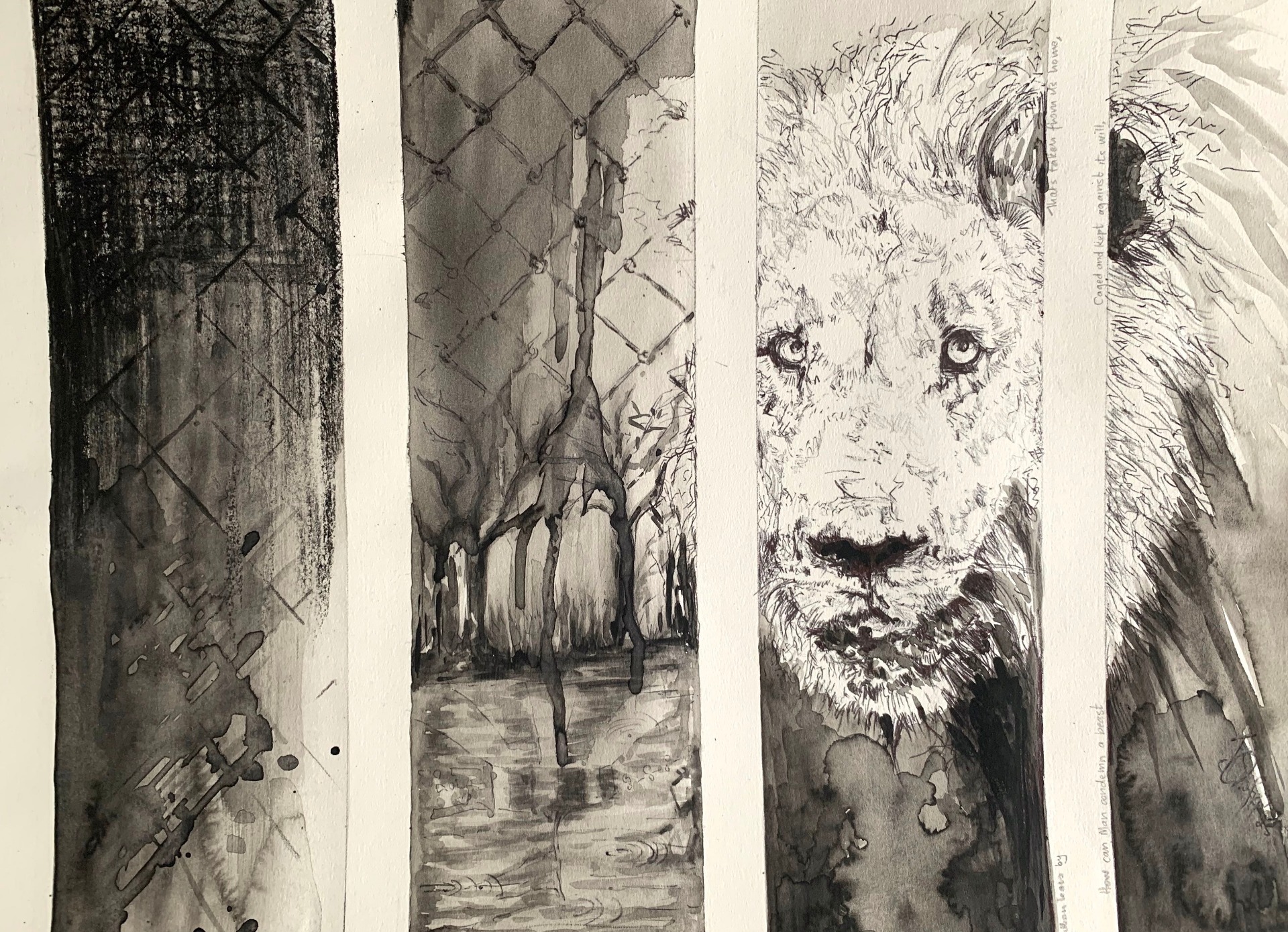
Strong white bars cut across the face of a lion, separating its viewer from the wildness and dignity that should define it.
Senseless Captivity is a comment on the unnecessary confinement of wild animals for human entertainment, display or exploitation. Behind the bars remains a living creature — not an ornament, a possession or a spectacle, but an animal with an instinctive need for space and freedom.
We may be able to contain the body, but can we ever truly justify taking away the life it was meant to live?
At the centre of a ring of flames, a lion's wounded face becomes the focus of a disturbing spectacle. Red and black evoke both the ring of fire, the striped gaudiness of the Big Top Arena and the blood price paid for our entertainment. The whip, the flames and the theatrical circle become symbols of domination disguised as performance.
Circus Act challenges the spectacle of wild animals forced to perform for human amusement. Behind the tradition and pageantry lies a more troubling reality: fear, control and the sacrifice of an animal's freedom.
We applaud the performance without always questioning what it has cost the performer.
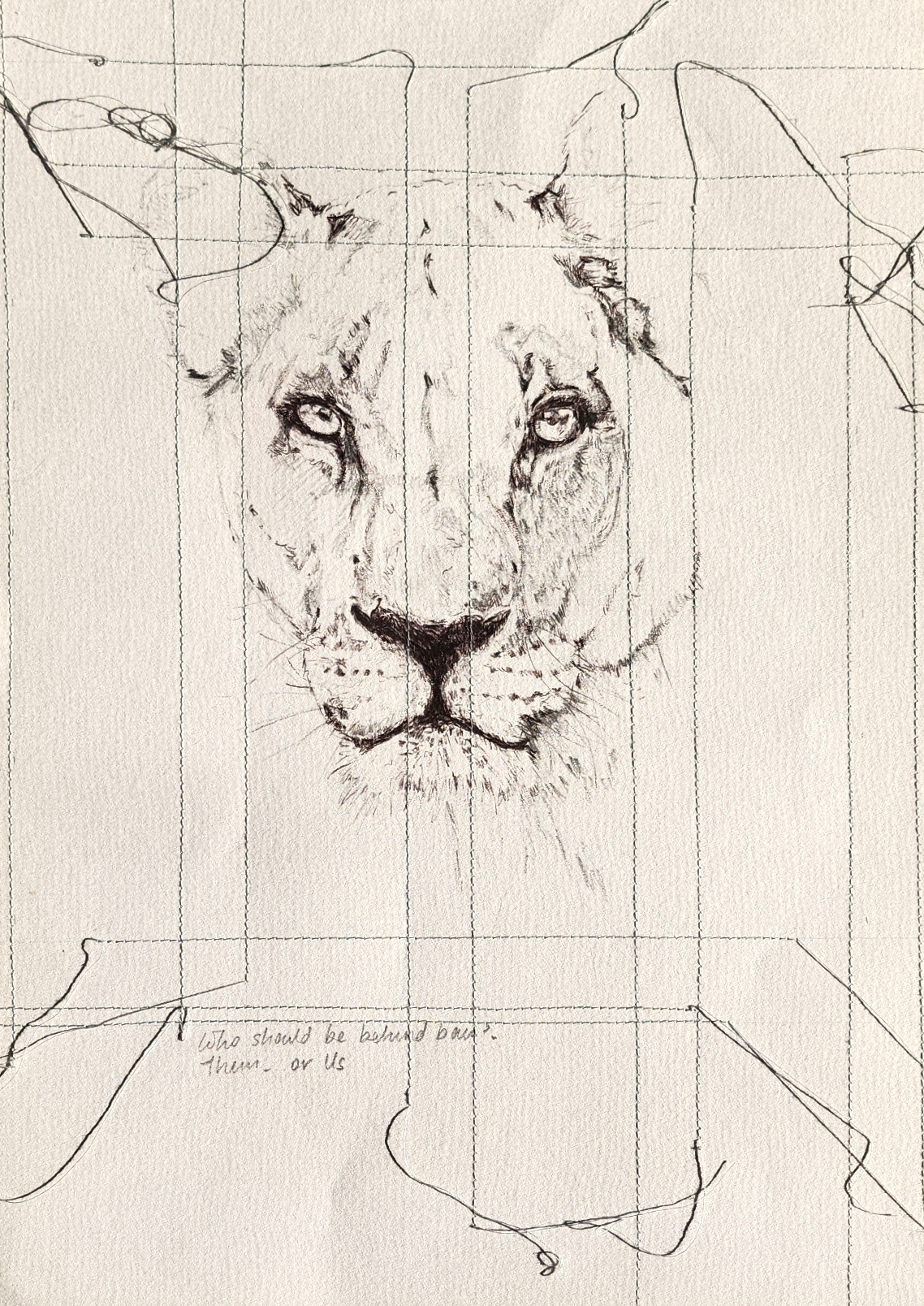
A lion's face, drawn in pencil, is obscured by grey cotton stitching — a fragile yet unsettling imitation of prison bars.
Who is the real prisoner? The lion, stripped of its freedom and confined for human pleasure, or the human being who believes that another living creature's freedom is ours to take?
From zoos and circuses to the cruelty of canned hunting, this work questions our right to dominate the wild. Perhaps the bars reveal less about the animal behind them than they do about ourselves.
A powerful thought when considering animals that have been stripped of their freedom and their voice.
Whose perspective is it that shapes the story?